Amber Engine SaaS PIM

Amber Engine Next-Gen PIM

What is a PIM?

Product information management (PIM) software are SaaS tools that aggregate a brand’s product information from multiple sources (spreadsheets, shared files, etc.) in one place. There, the software guides you through product information optimizations. The same PIM enables one-click downloads of files with optimized product data formatted specifically for any channel you plan to upload your catalog to.

Next-gen PIMs typically give a brand:
  • A unified source of truth for their product data
  • Powerful methods of cleaning-up and enhancing their product data
  • A repository for associated product images, video, and other assets
  • A streamlined way to import new or updated product data
  • a comprehensive and powerful syndication system
  • Lastly, the best PIMs also give their brands insights into how to change their product data to increase sales

The Challenge: First Gen lacked adoption

Amber Engine’s first generation PIM, named “Vesper”, lagged behind the competition. Despite having the credibility of being part of the Quicken “Family of Companies” (FOC), adoption rates were low. The UI was clunky, the taxonomy was rigid, and it took seasoned users to properly export endpoint-specific product data.
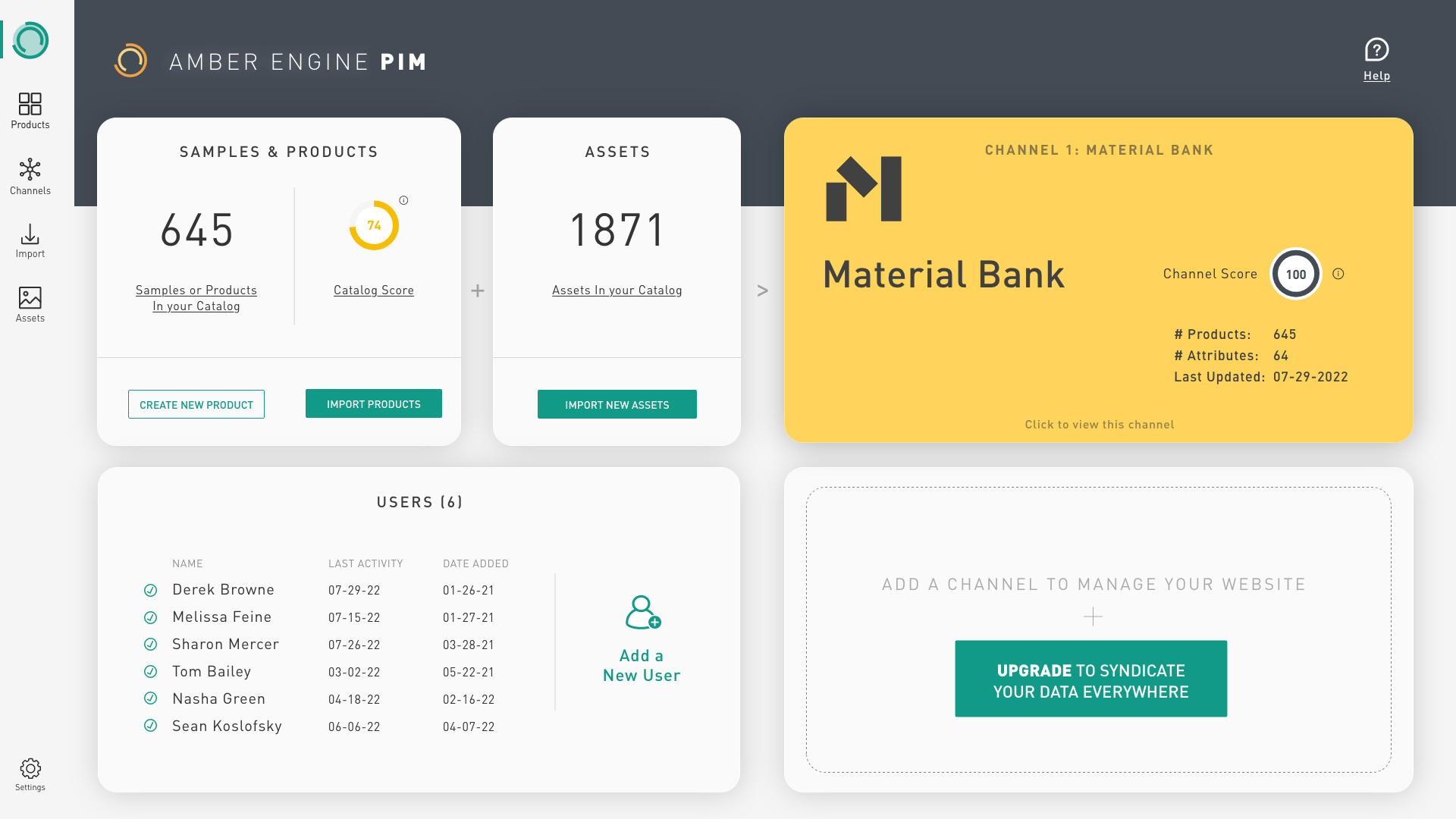
Two hours after I joined the group, we sat down as a team to start brainstorming and ideating our next-gen product.


Competitive Analysis

We identified mistakes our competitors were making very early on.
  • Rigid taxonomies meant the brands had to conform to the software, instead of the other way around
  • Rigid taxonomies also meant that brands couldn’t easily import data. They first had to translate THEIR data into the preferred format and template the other PIMs required
  • Confusing, legacy UIs confound new users
  • Proprietary, legacy terminology makes onboarding a nightmare (does a “list of products” makes sense? How about a “Content Segment of products”? You get it)
  • Bloated Digital Asset Management (DAM) features meant new brands would often be confused with imagery onboarding
  • Syndication systems that require a Systems Integration degree to master

Concepts

Coming Soon

The Experience today

Please note that at this moment, I am unable to publicly share proprietary design documentation, wireframes, and mockups. Therefore, I am sharing publicly-accessible promotional videos and Knowledge Base information to demonstrate the PIM Experience. During a 1-to-1 discussion, we can go into greater detail.

A case study that shows a quick view of the overall PIM experience
Scoring products helps brands keep their data clean and current
Grouping products within static and dynamic lists simplifies everything
Quickly adding data into the systen is a valuable differentiator
The formula-builder we designed to make bulk editing data easy